Welcome to Henan Weiyuan Machinery CO.,LTD
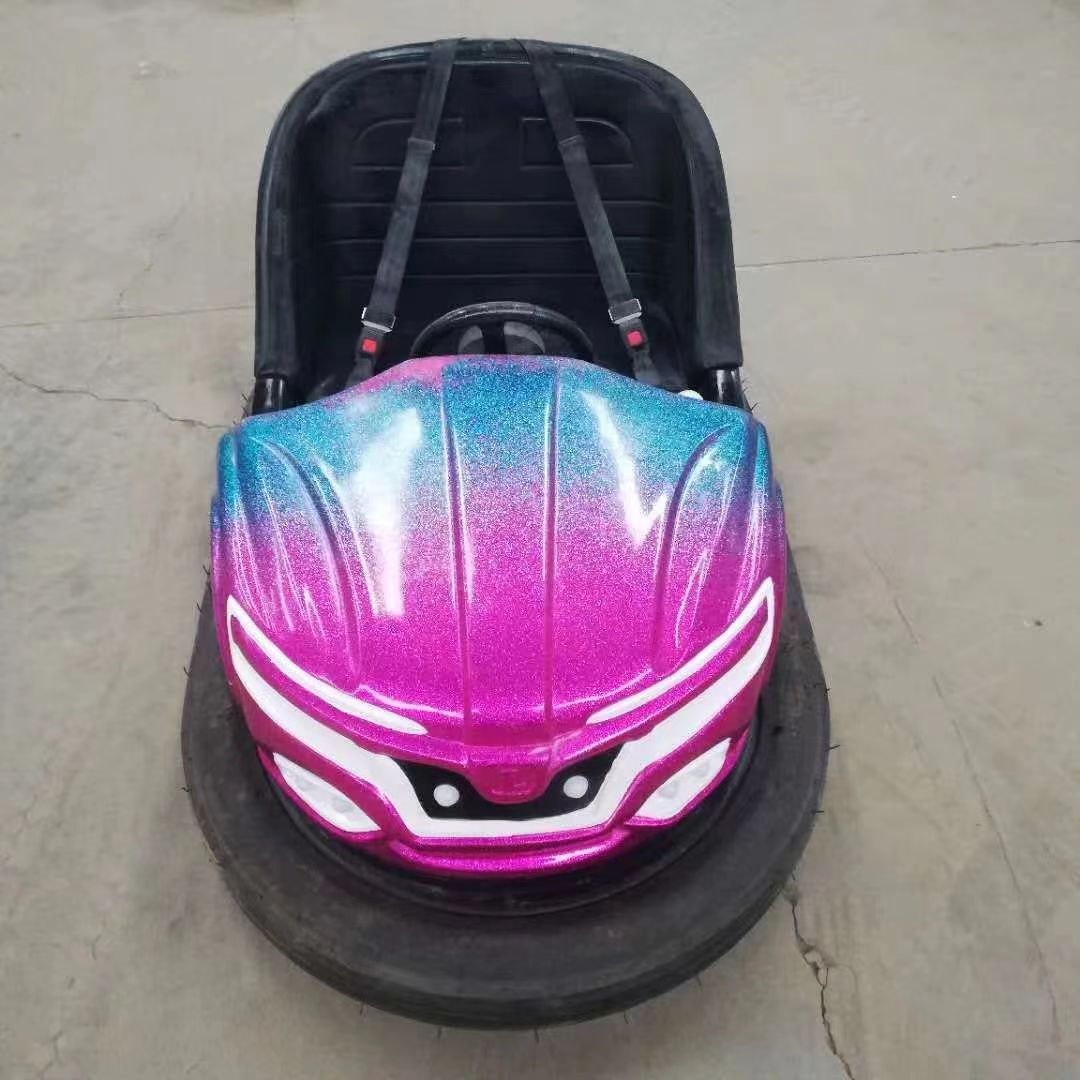
If you walk into almost any family entertainment venue — a theme park in Brazil, a shopping mall in Dubai, a seaside resort in the Philippines, or a weekend carnival in Eastern Europe — you will usually find one ride with a queue in front of it. Nine times out of ten, it is the bumper cars.
It is a simple idea: a small electric car, a flat arena, and a driver who is allowed to do the one thing they are never allowed to do on the road. But behind that simplicity sits a piece of equipment that can either become a steady, low-maintenance profit machine for the next ten years, or an expensive headache that spends more time with the technician than with the guests.
This guide walks through what actually matters when you buy bumper cars — the power systems, the sizing math, the safety checks, the build quality, the revenue side, and the questions you should be asking every supplier before you wire a single deposit. If you are planning your first ride purchase, or replacing an aging fleet, this is the checklist we wish every buyer started with.
Fashions in amusement equipment come and go. VR rooms open and close. Inflatable parks peak and plateau. Bumper cars, by contrast, have held their position for decades, for four practical reasons.
Universal appeal. The ride works for a six-year-old with a parent beside them and for four university students on a Saturday night. Very few attractions cover that range without extra staffing or extra equipment.
Low skill floor, high replay value. Nobody needs a lesson to drive one. The fun comes from collision, laughter and the social dynamic inside the arena — which means guests come back, and they come back with friends.
Predictable operation. No complex show program, no performer, no elaborate maintenance schedule. A well-built fleet runs day after day with routine checks.
Compact footprint, high throughput. A modest arena can keep twenty cars circulating and turn a queue quickly, which matters enormously when your rent is calculated per square meter.
That is the attraction side. The rest of this guide is about making sure the equipment side matches it.
This is the single most consequential decision, and it is usually the one buyers get wrong. Bumper cars are not one product — they are three different products that look similar.
Floor-grid (floor-network) bumper cars. The arena floor is built as a conductive grid, and each car draws power through contacts underneath. Cars are light, the drive is strong and continuous, and there is no battery to replace. The trade-off is that the floor must be constructed properly — a damaged or badly installed floor panel becomes an electrical and safety issue, and the arena is fixed in place. Best suited to permanent indoor venues: malls, FECs, indoor parks.
Ceiling-grid (sky-grid) bumper cars. Power is taken from a grid suspended above the arena, with a pickup pole on each car. Installation is usually faster and less invasive than a floor grid, and the arena can often be adapted to an existing concrete slab. Ceiling-grid systems are popular in large halls, exhibition centers and venues where digging up the floor is not an option. They do require adequate ceiling height and structural fixing points, so measure before you commit.
Battery (cordless) bumper cars. Each car carries its own battery and charging system, and the arena is simply a bounded flat surface with a barrier. This is the most flexible format by far: you can set up on a mall concourse, a fairground field, a resort plaza, or a temporary event site, and move it next season. It is the right choice for rental operators, event companies and venues that cannot commit to permanent infrastructure. The trade-off is battery management — charge cycles, battery lifespan, and the need for a disciplined charging routine.
A useful rule of thumb: permanent indoor venue with construction budget → grid system. Mobile, seasonal or uncertain site → battery. If you are genuinely unsure, ask a supplier to quote both formats for your exact dimensions and compare the total five-year cost, not just the purchase price.
Buyers tend to choose the car first and the arena second. Do the opposite.
Measure three things: the usable flat area, the clear height, and the access route (door widths, lift size, corridor turns). A fleet that cannot physically enter the building is worthless, and this happens more often than anyone admits.
Then work out the arena. As a working guide, allow roughly 12–20 square meters of arena per car for comfortable, safe circulation — more if you expect adult drivers, less for a supervised children's setup. A 400 square meter arena does not comfortably host 40 cars; it hosts around 20 to 30, and the difference is the difference between a smooth ride and a demolition derby with bruises.
Then think about throughput, not capacity. Guests do not ride all at once. A typical session runs three to five minutes. If a session takes four minutes plus two minutes of loading and unloading, you get around ten sessions an hour. Twenty cars × ten sessions × average occupancy of 1.5 riders gives you roughly 300 rides per hour at full utilization. That number, not the car count, is what pays your rent.
And do not forget the boring details: where riders queue, where they exit, where staff stand, where the emergency stop is reachable, and how you get a broken car out of the arena without stopping the whole session.
This is where a cheap quote becomes an expensive decision. Bumper cars are passenger-carrying electrical equipment. In most markets they fall under amusement ride or electrical safety regulation, and the burden of compliance sits with the operator, not the factory.
Ask for the documents, in writing, before you pay:
CE certification (and the relevant EN standards) for European markets
Any applicable electrical safety compliance for your country
Test reports for the shell material, chassis and electrical components
A clear wiring diagram and a maintenance manual in a language your technician can read
Look for these engineering features:
Overload and over-current protection on the drive circuit
Emergency stop reachable from outside the arena, plus per-car stop
Speed limitation set for the venue's audience, not for maximum thrill
Anti-pinch and rounded-edge design on the shell, especially at child height
Seat belts or restraint bars appropriate to the car class
Rubber bumper rings with enough thickness that the collision is absorbed by the ring, not the chassis
Battery protection and charging safeguards on cordless models
A supplier who hesitates, or offers to "send the certificate later," is telling you something. Certification costs money to obtain and money to maintain. A factory that has it will show it immediately.
Specification sheets all look similar. The differences are physical.
The shell. Good bumper car bodies are molded from quality fiberglass-reinforced plastic (FRP) or high-impact engineering plastic, finished with automotive-grade paint and clear coat. Run your hand along the edges: sharp mold lines, uneven thickness, and paint that feels thin or tacky are warning signs. Poor shells crack at the mounting points within a season, and once water gets into the laminate, the repair never really holds.
The chassis and frame. Ask what steel grade is used and how the frame is welded and treated. Thick-wall steel with proper anti-rust treatment survives years of collisions and humidity; thin tubing with a coat of paint does not. Look at the weld beads — even, continuous beads suggest a controlled process, while scattered spot welds suggest speed.
The drive and controller. The motor, reducer and controller are the parts that actually fail in service. Ask for brand names and models, and ask what happens when a controller fails in year three. A supplier who can name the components and quote a spare-part price is a supplier who expects the equipment to still exist in year three.
The bumpers. This is where riders' bodies meet physics. The ring should be thick, firmly anchored, and replaceable as a consumable part. Ask how often rings are expected to be replaced and what a set costs — this is a real line in your operating budget.
The lighting and sound. LED strips, underglow, themed headlights and a music system are not decoration — they are the reason guests photograph the ride and post it. Modern LED systems draw little power, last for years, and can be programmed to change color by session. A music system with a proper amplifier and protected speakers survives outdoor use; a cheap one does not.
Bumper cars are a blank canvas, and this is one of the few equipment categories where customization is genuinely affordable at the factory level.
For children's venues: cartoon and animal shells, softer colors, lower speed settings, brighter lighting, and often a two-seater configuration so a parent can ride along.
For teen and young-adult venues: aggressive body shapes, neon palettes, strobe and beat-synced lighting, and a louder sound system.
For mall and family resorts: clean, rounded, "candy" styling in brand colors, with logo placement on the shell and on the arena barrier — which also gives you a sellable sponsorship surface.
For rental and event operators: durable, easy-to-clean shells in a neutral palette, quick-connect charging, and a transport-friendly car design that fits standard trailers and van loads.
Custom color matching, logo printing, custom lighting programs and themed shells are typically available with a modest minimum order quantity. If a supplier cannot customize at all, they are reselling, not manufacturing — which is useful information.
A purchase decision is not "how much does a car cost." It is "what does a car earn, and what does it cost to keep earning."
Build a simple three-line model:
Revenue per car per day. Sessions per hour × hours operated × average occupancy × ticket price ÷ number of cars. Be conservative — use 60% utilization, not 100%.
Direct operating cost. Staff, electricity or charging, consumables (bumper rings, tires, brushes), routine maintenance, insurance, and site rent allocation.
Payback period. Total purchase plus installation and shipping ÷ monthly net contribution. A healthy target for this category is under 18 months for a well-placed permanent venue, and under 12 months for a high-traffic seasonal operation.
Two numbers buyers consistently underestimate: freight and installation. Grid-floor systems require civil work, and cordless fleets require charging infrastructure. Get these quoted explicitly rather than discovering them at the port.
Bumper cars are one of the most reliable revenue engines in family entertainment — but only when the equipment is sized to the site, built to survive collisions and humidity, certified for the market it operates in, and backed by a supplier who will still answer the phone in three years' time.
The difference between a ride that runs for a decade and one that limps through two seasons is rarely the ticket price. It is the handful of decisions made before the deposit: power system, arena density, certification, build quality, and support.
If you are weighing options for a mall, park, resort or rental operation, send us your site dimensions, target audience, and budget range. We will come back with a concrete configuration, a realistic capacity estimate, and a transparent cost breakdown — so the decision is made on numbers rather than photographs.
#bumpercars #bumpercarride #amusementride #familyentertainmentcenter #themeparkequipment #mallattraction #dodgemcars #carnivalride #rideinvestment #amusementindustry #fecbusiness #kidscars
Tel:+86-371-63363699
Fax :+86-371-63363699
Mobile:+86-13613806294
E-mail: sales2@weiyuanmachinery.com
Skype: ann.wei.yuan
Whatsapp: +86-13613806294( wechat :rosemachinery5211)


